Engineering guide · Surface finishing
Powder Coat vs Wet Paint: Which Finish Is Right for Your Parts?
Compare durability, cost, film thickness, color options, VOCs, and repair considerations. We explain how to choose a finish that fits your metal part, production plan, and operating environment.
The short version
Choose powder coat when you want a durable production finish with low VOC emissions and your part can tolerate oven curing. Choose wet paint when a thin film, on-site repair, complex mixed-material assembly, or lower-temperature process matters more.
The right answer depends on part geometry, production volume, exposure, and budget—not on the coating name alone.
Quick Answer: Which Finish Wins?
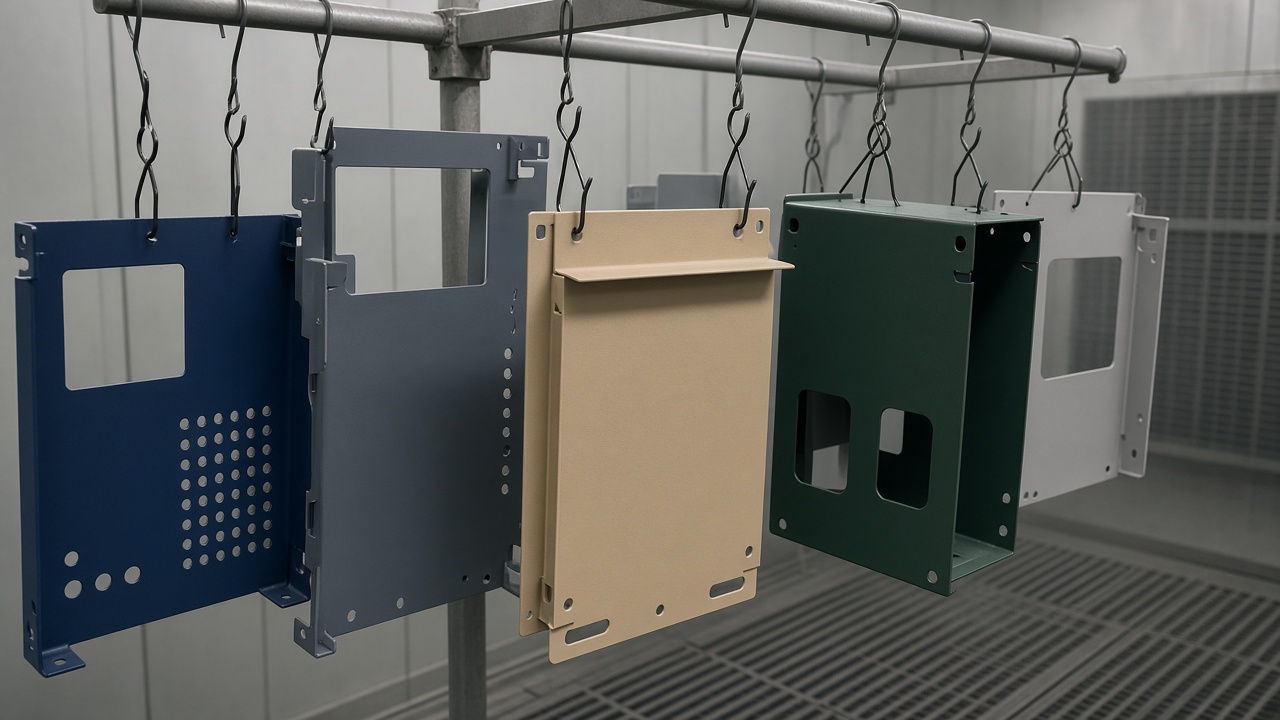
For many fabricated steel and aluminum components in repeat production, powder coating is a strong choice for a tough, consistent finish and reduced solvent use. Wet paint earns its place when you need a thinner coating, need to finish a large item that will not fit an available oven, or expect to repair the finish in the field.
Decision cue
If the part can be cleaned, grounded, racked, and oven-cured as a production batch, start by evaluating powder; if it cannot, evaluate a compatible liquid coating system.
What Is Powder Coating?
Powder coating is a dry finishing process. A spray gun applies electrically charged powder to a grounded part; the coated part then enters an oven, where heat melts and cures the powder into a continuous film. Unlike conventional solvent-borne liquid paint, the powder is not carried to the surface in a solvent.
The resin chemistry shapes the coating’s performance. Polyester is widely considered for exterior exposure and color retention; epoxy is used where chemical resistance and corrosion protection are priorities, though it is generally less suited to prolonged direct sunlight; hybrid systems often target indoor applications; and polyurethane options can be selected where a combination of appearance and performance is needed. The correct selection still depends on the supplier’s product data and the service conditions.
Powder Coating Process Steps
A dependable finish is the result of the full process, not just the powder formulation. In our sheet metal work, we review finish requirements alongside formed features, hardware, welds, and critical dimensions so that the fabrication can be prepared for the coating sequence.
-
1
Pretreat the substrate
Remove oil, soil, oxides, and other contaminants; apply an appropriate phosphate or conversion coating when the specification and substrate call for it.
-
2
Mask and rack
Protect threads, contact points, and other no-coat zones, then hang the part so it can be grounded and coated consistently.
-
3
Apply powder electrostatically
The operator applies powder with attention to coverage, grounding, recesses, edges, and the part’s hanging orientation.
-
4
Cure in an oven
The specified time and temperature allow the powder to flow and cure; the part itself must reach the required cure conditions.
-
5
Inspect the finish
Check appearance, coverage, thickness, and any specified adhesion or corrosion test requirements.
Why pretreatment matters
Coating cannot compensate for a contaminated or poorly prepared surface. Cleaning and a suitable conversion treatment help establish adhesion and corrosion performance; the exact pretreatment should match the metal, exposure, and coating specification.
Powder Coating Limitations
The part has to fit the finishing line’s handling and oven envelope, and it must tolerate the curing cycle. Powder is also less convenient when the assembly contains temperature-sensitive electronics, plastics, seals, or installed components that cannot withstand the process. Confirm the oven dimensions and cure profile with the finisher before committing the design.
A powder film is typically thicker than a thin liquid coating, so it may be unsuitable where very tight fits or minimal build are required. Sharp external corners can also receive less coating than nearby flat surfaces; radius edges where practical and make edge coverage part of the specification. Finally, small production runs can carry a disproportionate color-change burden because the spray equipment and recovery system need purge and cleaning time between colors.
What Is Wet Paint?
Wet paint is a liquid coating applied to the part and then dried or cured. The coating may be solvent-borne, waterborne, or a two-component system in which separate components react after mixing. Different products suit different substrates and service conditions, so “wet paint” is a process category rather than one uniform performance level.
Some liquid finishes air-dry; others use heat to accelerate or complete the cure. A well-selected and correctly applied liquid coating can be engineered for demanding environments. Its practical advantages often include lower-temperature application, thinner films, and easier local touch-up compared with a cured powder finish.
Wet Paint Application Methods
Application method affects transfer efficiency, overspray, film build, and appearance. The right method depends on part shape, coating viscosity, run size, and the finish quality required.
| Method | Typical fit | Practical consideration |
|---|---|---|
| Conventional spray | Broad range of part shapes and coating products | Operator technique and overspray management influence finish and transfer efficiency. |
| HVLP spray | Controlled liquid application where the coating is compatible | Gun setup, air supply, and operator technique still affect atomization and appearance. |
| Electrostatic liquid | Production coating of conductive parts | Grounding and part geometry influence wrap and coverage. |
| Brush or roller | Local touch-ups and some maintenance applications | Useful for repair access, but may leave a different texture or film profile. |
Wet Paint Limitations
Many liquid coatings contain VOCs, and solvent-borne products require careful ventilation, exposure controls, storage, and disposal. Waterborne and low-VOC products can reduce some solvent-related concerns, but still require controls appropriate to their ingredients and application method.
Wet films can sag or run if applied too heavily, and airborne dust can create visible nibs. Depending on the product and conditions, curing may take longer than a production bake cycle. Managing flash times, overspray, solvent handling, and the work area is part of achieving a repeatable finish.
Head-to-Head Comparison: The Criteria That Decide It
A useful comparison starts with the application and the complete coating system. The following ranges are common planning references, not acceptance limits: confirm actual film build, test method, and performance with the coating supplier and finisher.
Durability and Corrosion Resistance
A properly pretreated, correctly cured powder coating can provide strong chip resistance and weatherability compared with many general-purpose liquid systems. That is not a universal rule: resin chemistry, film build, substrate preparation, cure, exposure, and maintenance all affect results. A well-specified multi-coat liquid system can match or exceed powder in particular chemical or industrial environments.
ASTM B117 salt spray testing is sometimes used to compare corrosion performance under controlled conditions, but a test result is not a direct prediction of years in service. Compare the same substrate, pretreatment, coating system, film thickness, scribe method, and evaluation criteria. Adhesion results likewise describe a specified test procedure—not an unconditional guarantee for every production part.
Specify the system, not only the finish name
For a corrosion-sensitive enclosure or outdoor bracket, define the substrate preparation, coating type, thickness, and test expectations together. “Powder coated” by itself does not define the protection level.
Film Thickness and Edge Coverage
As a broad reference, powder coatings are often specified around 50–100 μm (about 2–4 mil), while liquid systems may be specified around 25–75 μm (about 1–3 mil) for a dry film. Product requirements vary considerably, so use the selected coating’s data sheet and the drawing specification rather than treating these ranges as universal.
Film build affects assembly fit. Coating can reduce clearance in threaded holes, alter a slip fit, change gasket compression, or interfere with mating faces. Sharp edges are a particular concern because either process can leave less protection at a corner than on an adjacent flat face. Specify masking or an acceptable edge condition where those features are functional.
| Feature | Why build matters | Drawing action |
|---|---|---|
| Threads and tapped holes | Coating may reduce engagement or make assembly difficult. | Call out masking or define the post-finish thread requirement. |
| Gasket lands and mating faces | Build can affect sealing, contact, and dimensional fit. | Identify functional no-coat areas and critical dimensions. |
| Sharp edges | Coverage can be thinner at edges and corners. | Consider edge breaks and include edge coverage in finish review. |
Cost and Throughput
There is no universal lowest-cost process. A powder quote may reflect material, pretreatment, labor, racking, oven energy, masking, color-change and purge time, inspection, and rework risk. A liquid quote may include paint and reducer, labor, booth and ventilation requirements, application passes, drying or bake time, masking, solvent handling, and cleanup.
Volume and batch size change the comparison. A repeat run of a single color may spread setup effort across many parts. A prototype or small mixed-color batch may absorb a larger share of handling and changeover time. Also consider the cost of rejected parts, repair access, and the expected service life—not only the coating line item.
A practical cost-per-part framework
- 1
Add direct finishing costs: coating material, preparation, masking, labor, energy, and inspection.
- 2
Include setup and yield: divide batch setup and color-change time across the actual order quantity, then account for expected rework or scrap.
- 3
Compare lifecycle needs: factor in maintenance, touch-up access, replacement intervals, and consequences of finish failure.
Color, Gloss, and Texture
Both processes can support broad color and appearance choices. Powder is available in many smooth, textured, metallic, and wrinkle finishes, while liquid paint offers a wide range of colors, gloss levels, and coating effects. Actual availability depends on the product and supplier. Exact color matching should be agreed against a recognized reference, approved physical sample, or both.
Matching a color across powder and liquid systems can be challenging because their materials and application characteristics differ. Batch variation, substrate, film thickness, texture, gloss, and viewing conditions all influence perceived color. Custom powder colors may also involve different sourcing and lead times than standard stocked options; confirm availability early when the color is release-critical.
Environmental, Health, and Regulatory Profile
Powder coating uses no solvent carrier, so it can avoid the VOC emissions associated with many solvent-borne liquid coatings. Powder overspray may be collected in an appropriately designed system, but collection does not mean there is no waste or worker exposure to manage. Handling, ventilation, housekeeping, personal protection, and disposal must follow the product safety information and applicable requirements.
Liquid coatings vary: solvent-borne products may contribute VOC emissions, while waterborne and low-VOC formulations can offer alternatives. Those systems still need suitable controls for aerosols, ingredients, cleaning, and waste. Low-bake powders and improved liquid systems are expanding the available options; the best environmental comparison should use the actual product data and your organization’s reporting criteria.
Repair, Touch-Up, and Rework
Wet paint is usually the more practical choice for field touch-up: a compatible repair coating can be applied without returning the whole part to an oven. The repaired area may not perfectly match the original color, gloss, or texture, so establish an acceptable repair method for visible surfaces.
Powder damage can sometimes be cleaned, prepared, and repaired with a compatible liquid touch-up paint, but the patch may remain visible and may not reproduce the original powder performance exactly. For extensive damage or a critical cosmetic surface, stripping and recoating may be the more reliable rework route. Define repair expectations before production if the part will be serviced in the field.
Application by Use Case
Use the operating environment and assembly sequence to narrow the choice. These are starting points for a drawing review, not a substitute for selecting the exact coating system.
Outdoor Equipment and Architectural Metal
For long-term outdoor exposure, powder is often a practical candidate, particularly when an appropriate exterior-grade resin and pretreatment are specified. The pretreatment is essential: identify the substrate, cleaning and conversion process, coating build, and corrosion or weathering expectations. For coastal or chemical exposure, ask the coating supplier to recommend and document the complete system rather than choosing by color chart alone.
Machinery, Enclosures, and Industrial Frames
Powder can justify its cost on repeated enclosures, brackets, or frames that need a durable finish and can be processed as complete parts before assembly. Wet paint may be preferable when the assembly combines metals with heat-sensitive components, needs a very thin film, or requires coating after fabrication at a size that is impractical for available ovens. At Rapidsheetfab, we consider finishing alongside cutting, bending, welding, hardware, and assembly details so that the selected process fits the part’s production route.
Assemblies with Plastics, Electronics, or Heat-Sensitive Components
Oven cure can be a problem for installed electronics, plastics, adhesives, seals, and other components with limited heat tolerance. Where practical, finish the metal parts before installing sensitive components. If the design requires coating an assembled unit, evaluate a compatible wet paint or low-temperature coating option and confirm the actual cure conditions with the coating supplier.
Large Parts and Low-Volume or Prototype Runs
Large fabrications may exceed a finishing line’s oven or handling capacity, making liquid paint more practical. Small runs and prototypes also need a realistic review of powder color-change and setup time. A liquid system can be easier to arrange for one-off or mixed-color parts, though the specific process, appearance, and cure schedule still need agreement with the finisher.
Field Repair and Maintenance Coatings
For equipment that must be maintained at its installed location, wet paint is generally the practical repair choice. Record the coating system and color, prepare the damaged surface as required, and use a compatible repair product. If cosmetic uniformity or corrosion protection is critical, specify inspection and recoat criteria rather than relying on an informal touch-up.
Design for Finish: What to Get Right Before Release
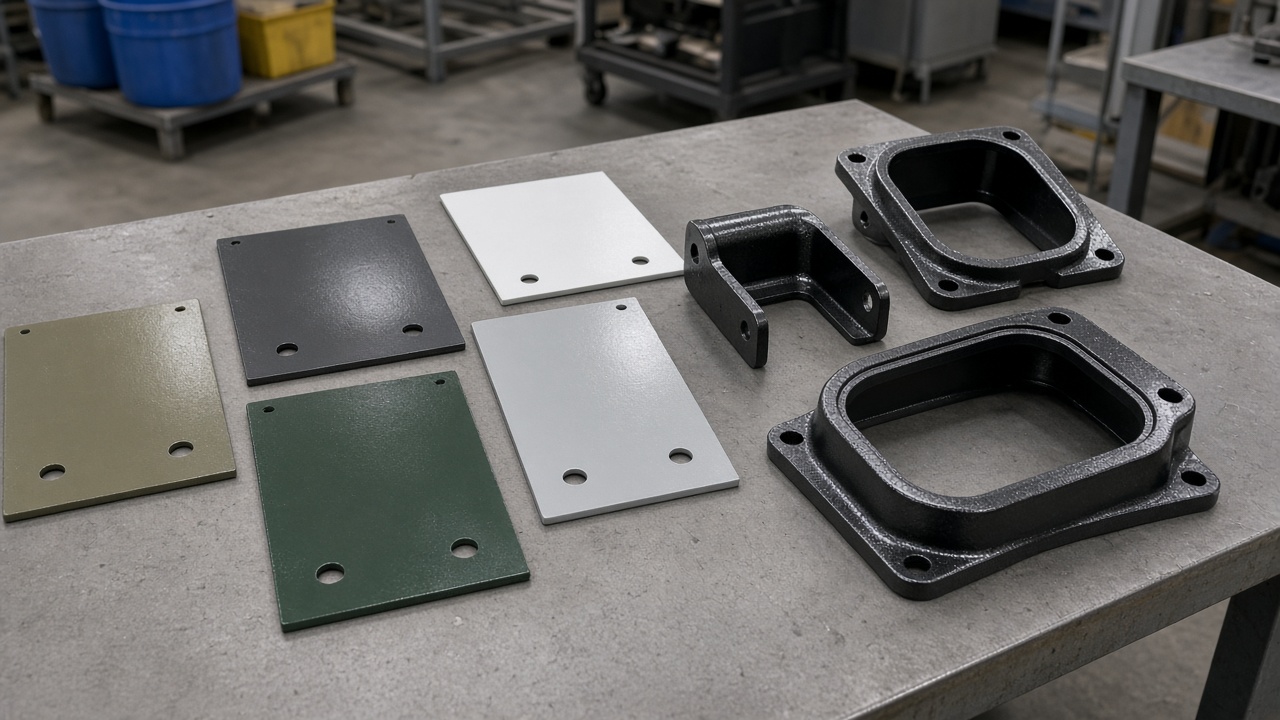
A coating callout affects design, assembly, and inspection. Before releasing a drawing, review where the film will build, how the part will be held, and how the finisher can reach its surfaces.
-
1
Account for coating build
Review fits, threads, slip surfaces, gasket lands, mating faces, and critical dimensions with the expected film thickness in mind.
-
2
Define mask zones
Mark threads, grounding points, electrical contacts, and functional no-coat areas directly on the drawing.
-
3
Plan grounding and hanging
Powder application needs an electrical ground; provide an acceptable hanging point or agree on a location that can be concealed or tolerated.
-
4
Choose assembly sequence
Decide which hardware is installed before finishing and which is added afterward; include any hardware that must remain uncoated.
-
5
Allow drainage and access
Provide suitable drainage and venting so pretreatment liquids do not become trapped and create defects or handling issues.
-
6
Avoid coating traps
Review enclosed folds, deep recesses, and pockets that can trap liquid or powder and make uniform coverage difficult.
How to Specify the Finish on Your Drawing or RFQ
A clear coating specification reduces interpretation gaps between design, sourcing, fabrication, finishing, and inspection. Include the performance requirement as well as the appearance target, and identify which features must remain within dimensional limits after coating.
Copy-ready RFQ finish checklist
Coating type: powder or liquid, plus the resin or product system if already selected.
Color reference: RAL, Pantone, manufacturer code, or an approved physical sample.
Appearance: gloss level, texture, metallic effect, and any visible-face or cosmetic acceptance requirements.
Film build: acceptable thickness range and where it must be measured.
Pretreatment and cure: required substrate preparation and cure conditions or approved coating-system requirements.
Testing: applicable adhesion, corrosion, weathering, or other test standards, including acceptance criteria where needed.
Masking and dimensions: identify masked regions, threads, electrical contacts, critical fits, and post-finish measurements.
Quantity and sample approval: provide prototype and production quantities, delivery needs, and whether a first-off or color sample must be approved.
For a complete RFQ review, share the drawing or 3D file, material, quantity, finish requirement, critical dimensions, and any documentation needs. At Rapidsheetfab, our quality workflow includes first-article and in-process checks, and coating documentation can be coordinated through qualified finishing partners when the project requires it.
Frequently Asked Questions
Is Powder Coating Better Than Wet Paint?
Powder coating is often better for durable production finishes and VOC reduction compared with many solvent-borne systems. It is not automatically the better choice for every part: wet paint may suit thin-film requirements, heat-sensitive assemblies, large items, or field repair needs. Compare the complete coating system and production route.
Is It Better to Paint or Powder Coat?
Decide in four steps: define the exposure environment, check the part’s geometry and oven compatibility, compare actual batch volume and setup costs, then consider repair requirements. Powder commonly suits repeatable, oven-compatible metal parts; paint often suits assemblies or maintenance situations where thin films, lower-temperature cure, or local touch-up matter.
What Are the Downsides of Powder Coating?
The main constraints are oven and handling size, cure heat, a film build that may not suit tight tolerances, possible thin coverage at sharp edges, color-change costs on small runs, and more difficult field repair. These issues can often be managed through design review and clear process planning.
How Long Will Powder Coat Last?
There is no guaranteed lifespan from the term “powder coat” alone. Service life varies with pretreatment, resin, film build, substrate, UV and chemical exposure, installation, and maintenance. Depending on those conditions, a finish may remain serviceable for several years or well beyond a decade; severe exposure can shorten that substantially. Use system-specific test data and field requirements for planning.
Can Powder Coating Be Touched Up in the Field?
Yes, a compatible liquid touch-up product may repair a small damaged area, but color, gloss, texture, and performance may differ from the original powder finish. For widespread damage or a critical appearance, plan for professional preparation and recoating rather than expecting a seamless local patch.
Which Finish Is Cheaper?
It depends on quantity, part size, color changes, masking, preparation, labor, cure time, and expected rework. Powder may be cost-effective for repeat batches; liquid paint may be more practical for a low-volume, large, or mixed-material part. Compare the total cost per accepted part and expected lifecycle, not just the quoted coating price.
Can Powder Coating Match a Specific Color?
Often, but a reference code alone may not guarantee a perfect visual match. Gloss, texture, substrate, film build, and product batch affect appearance, and matching between powder and liquid finishes can be particularly difficult. For color-critical work, request a physical sample for approval and agree on viewing conditions and acceptable variation.
Trends Shaping the Choice
The choice is becoming more specific than powder versus paint. Low-bake and other low-temperature powders can broaden options for parts with tighter thermal limits, but the substrate and every component must still tolerate the actual cure profile. Waterborne and low-VOC liquid coatings are also improving as alternatives where a conventional solvent-heavy system would be a concern.
Some programs use selective or hybrid finishing workflows—for example, powder-coated fabricated panels with liquid-painted repairs or components finished separately before assembly. These approaches can balance production durability with assembly and maintenance needs, provided the interfaces and finish boundaries are clearly controlled.
OEM sustainability reporting and regulatory pressure on solvent use are encouraging buyers to request more information about VOC content, waste, and process controls. Ask for product-specific documentation and compare actual systems rather than making assumptions based solely on whether a coating is powder, waterborne, or solvent-borne.
Get the Finish Decision Right the First Time
Start by defining the environment, part geometry, volume, and repair expectations. Then select a coating system that suits those requirements and specify pretreatment, film build, appearance, masking, testing, and critical post-finish dimensions. Reviewing these details before production helps avoid a finish that looks right on a sample but creates fit, assembly, or service problems later.
At Rapidsheetfab, we support custom sheet metal projects from one-piece prototypes and NPI builds through low-volume and repeat production. Powder coating and other finishing processes are coordinated through qualified partners alongside our fabrication workflow. If your drawing is still being developed, we can review finish-sensitive features or discuss a sample run before you commit to production.
Request a finishing reviewTalk with our team
Review your finish before release
Send your drawing, material, quantities, finish target, and critical requirements. We can review how the coating choice fits your fabricated part and production plan.