
Electrical Barrier Plates
We fabricate electrical barrier plates to separate circuits, isolate components, and maintain clearances inside enclosures and control cabinets. Drawings in STEP, DXF, or PDF are reviewed for manufacturability within one business day.
- STEP, DXF, and PDF drawing review for manufacturability
- MOQ of one piece, from prototype to regular runs
- ISO 9001:2015 governed production flow
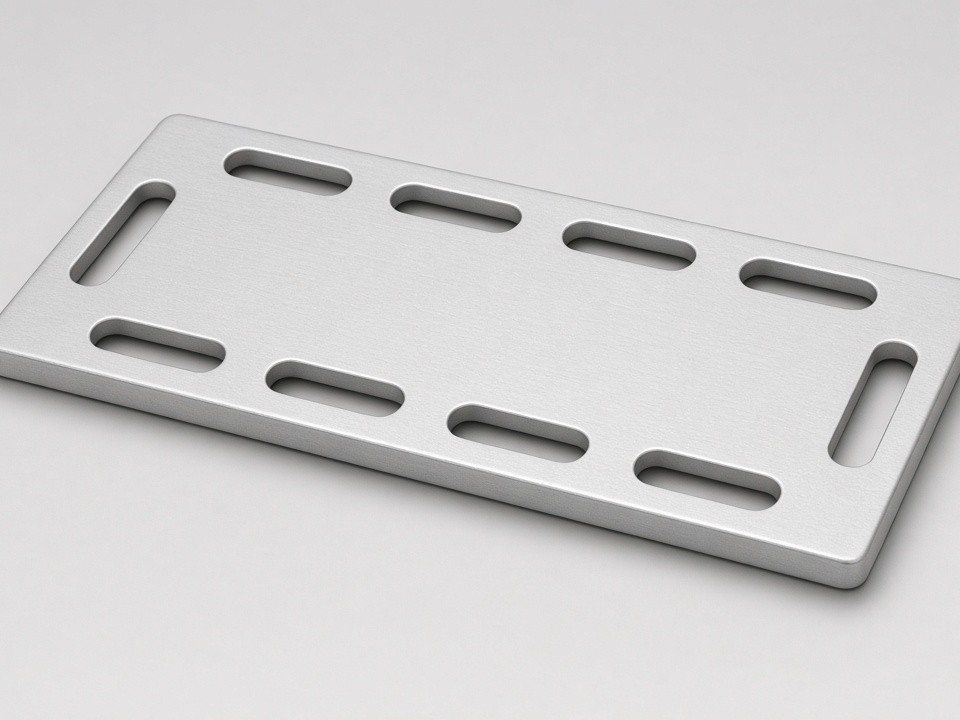
Material Selection for Barrier Plates
Barrier plates commonly use SUS304 or SUS316 for corrosion resistance in humid or wash-down environments. Thicknesses run from 0.5 mm to 12 mm depending on voltage rating and mounting method.
SUS304 / SUS316
Corrosion resistance for humid or wash-down environments.
SPCC / Q235
Cost-effective options when powder coating is specified.
Aluminum 5052 / 6061
Suited to weight-sensitive assemblies.
Copper C1100
Selected for grounding or high-conductivity requirements.
Cutting, Bending, and Forming
Slots, ventilation patterns, and mounting holes are produced in the same laser cycle, eliminating secondary drilling for most designs. Formed louvers, embosses, and PEM hardware locations are added during the bending stage when geometry permits.
Laser Cutting and Feature Accuracy
- Five fiber lasers handle sheets up to 2000 × 4000 mm.
- Stainless steel cuts cleanly to 20 mm, carbon steel to 25 mm, and aluminum to 16 mm.
- Standard laser tolerance is ±0.10 mm.
Bending and Formed Features
- Seven CNC press brakes up to 230 T × 3000 mm form flanges, returns, and stiffening ribs.
- Typical bend tolerance is ±0.20–0.30 mm.
- Formed louvers, embosses, and PEM hardware locations added during bending.
Welding and Hardware Integration
TIG, MIG/MAG, laser, and spot welding join seams and brackets. M2–M12 tapping, rivet nuts, and stand-offs are inserted after bending. Assemblies leave the shop ready for final integration, reducing the number of suppliers required for a complete enclosure.
Inspection and Documentation
IQC, FAI, IPQC, FQC, and OQC checkpoints are applied on every order. ISO 9001:2015 governs the entire flow.
Standard Documentation
- First-article reports
- Material certificates
- RoHS / REACH declarations
0
Inspection checkpoints on every order
0
Business day drawing review
0
ISO 9001:2015 governing production
Verification Methods
CMM and 2.5D vision systems verify critical dimensions.
Surface Finishing Options
Powder coating, anodizing, passivation, electropolishing, and screen printing are managed through qualified partners. These steps are quoted separately and scheduled to match production timing. In-house processes stop at deburring, grinding, and brushing.
Project Fit and Volume Range
Barrier plates suit control panels, switchgear, robotics cabinets, medical analyzers, and power distribution units. MOQ is one piece.
RFQ Process
Send drawings, material callouts, finish requirements, and target quantities to [email protected]. Include any critical tolerances or cosmetic standards. A firm quote with lead time and DFM notes follows within one business day.
Rapidsheetfab is located at Sanjiang Industrial Zone, Hengli Town, Dongguan City, Guangdong Province, China.
Email Your RFQWhat to Include in Your RFQ
- Drawings in STEP, DXF, or PDF format
- Material callouts (SUS304, SUS316, SPCC, Q235, Aluminum 5052/6061, Copper C1100)
- Finish requirements and target quantities
- Critical tolerances or cosmetic standards
Request a Quote
Submit your electrical barrier plate requirements and receive a firm quote with lead time and DFM notes within one business day.