
Custom Automation Equipment Guards
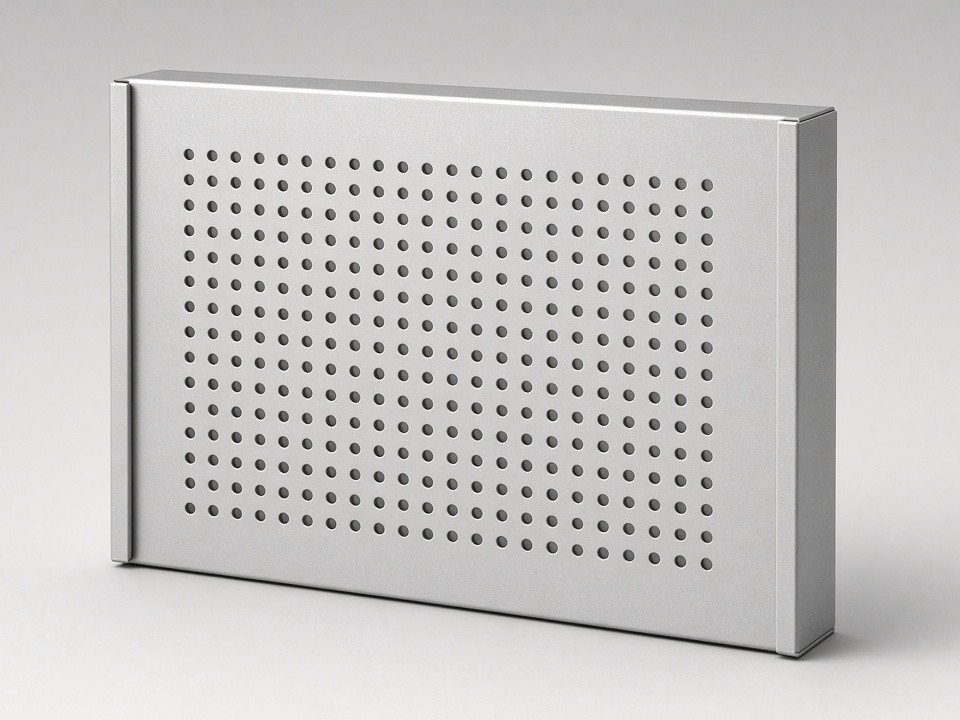
Industrial automation lines need guards that fit exact machine footprints, clear safety standards, and survive daily operation. Rapidsheetfab builds these parts from customer drawings, starting with single prototypes and moving into scheduled production runs.
- Prototype Lead Time
- 3–12 working days
- Production Batches
- 10–25 days
- Minimum Order
- 1 piece
Material Choices for Equipment Guards
Most automation guards use 1.5 mm to 4 mm stainless or carbon steel. All stock is traceable with mill certificates supplied on request.
SUS304 Stainless
Handles wash-down areas where corrosion resistance is required.
SPCC / Q235 Carbon Steel
Works where cost matters more than corrosion resistance.
Aluminum 5052
Appears on lighter panels where weight reduction helps.
Traceable Stock
Mill certificates supplied on request for every batch.
Core Fabrication Steps
From flat pattern to finished assembly, each stage runs in-house before any outside finishing.
Equipment Capacity
- 5 fiber laser machines — sheets up to 2000 × 4000 mm; stainless to 20 mm, carbon steel to 25 mm.
- 7 CNC press brakes — up to 230 t and 3000 mm length.
- Punching and tapping — holes, louvers, and PEM inserts.
- Welding and hardware insertion — completed before any outside finishing.
-
1
Laser Cutting
Produces the flat patterns on five fiber machines, handling large sheet formats and thick stainless or carbon steel.
-
2
CNC Press Brake Forming
Seven machines form the blanks, reaching 230 t and 3000 mm length for consistent bends.
-
3
Punching, Louvers & PEM Inserts
Holes, louvers, and PEM inserts are added by punching or tapping before assembly.
-
4
Welding & Hardware Insertion
Final assembly includes TIG or MIG welding plus hardware insertion, all completed before any outside finishing.
Welding and Assembly Details
Guards often require continuous seams or spot welds for rigidity. In-house TIG and MIG/MAG stations handle both visible and structural joints. Spot welding supports high-volume bracket attachment. After welding, parts move through deburring and grinding to remove sharp edges and prepare surfaces for coating.
Process Sequence
Tolerances and Inspection Flow
Every batch follows IQC, FAI, IPQC, FQC, and OQC stages. CMM and 2.5D vision reports are standard deliverables alongside material and RoHS documentation.
±0.10 mm
Laser cut edges
±0.20–0.30 mm
Formed dimensions
±0.10–0.20 mm
Critical holes
5 stages
IQC, FAI, IPQC, FQC, OQC
From Prototype to Repeat Orders
A single guard can be quoted and shipped in 3–12 working days. Once the design is proven, the same tooling and programs support 10–25 day production batches. MOQ remains one piece, so design changes stay inexpensive until volumes rise.
Start with a PrototypePrototype Stage
Quoted and shipped in 3–12 working days from a single set of drawings.
Production Stage
Same tooling and programs support 10–25 day batch runs.
Low-Risk Scaling
MOQ remains one piece, so design changes stay inexpensive until volumes rise.
Typical Automation Guard Projects
OEMs request full machine enclosures, light-curtain brackets, conveyor side guards, and robot cell panels. These parts usually combine laser-cut profiles, multiple bends, welded frames, and powder-coated or anodized surfaces. Rapidsheetfab coordinates the finishing through qualified partners rather than claiming in-house capability.
Full Machine Enclosures
Laser-cut profiles and welded frames sized to the machine footprint.
Light-Curtain Brackets
Formed brackets with critical holes held to ±0.10–0.20 mm.
Conveyor Side Guards
Multiple bends and continuous seams for daily operational rigidity.
Robot Cell Panels
Panels finished through qualified partners with powder coating or anodizing.
Next Step
Send your PDF, DXF, or STEP files along with material, finish, and quantity requirements. Engineering will review for manufacturability and return a fixed quote with lead time.
Email: [email protected]
Address: Sanjiang Industrial Zone, Hengli Town, Dongguan City, Guangdong Province, China
What to Include in Your RFQ
- PDF, DXF, or STEP drawing files
- Material grade and thickness (1.5 mm to 4 mm)
- Finish requirement — powder coating or anodizing
- Quantity — from single prototype to scheduled batches
Engineering reviews every file for manufacturability before quoting.