Aluminum for Sheet Metal Fabrication
Rapidsheetfab manufactures custom aluminum sheet metal parts for industrial OEMs—covering prototypes, NPI, and low-volume repeat production. We pair fast engineering feedback with controlled quality and export-ready communication so your aluminum enclosures, c
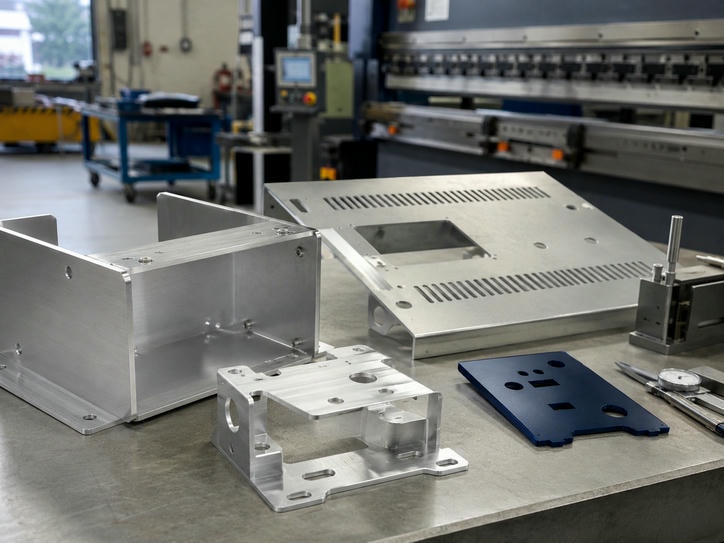
Custom sheet metal fabrication for industrial OEMs
Engineering details are organized around material, tolerance, surface finish, inspection, and production readiness.
Use the inquiry module to send drawings, quantities, standards, and delivery targets for a practical manufacturing review.
Service Details
Rapidsheetfab manufactures custom aluminum sheet metal parts for industrial OEMs—covering prototypes, NPI, and low-volume repeat production. We pair fast engineering feedback with controlled quality and export-ready communication so your aluminum enclosures, chassis, panels, brackets, frames, and welded assemblies move from drawing to delivery with confidence.
- Location: Dongguan, Guangdong, China
- Facility: 3,500 m²
- Founded: 2015
- Certification: ISO 9001:2015
Why Aluminum for Sheet Metal Fabrication?
- Light weight with good strength-to-weight ratio
- Corrosion resistance (especially with anodizing or powder coating)
- Excellent formability (5052, 5754) and machinability (6061)
- Clean cosmetics for visible enclosures and panels
- Good thermal and electrical conductivity for electronics and energy equipment
Our Aluminum Capabilities
- Cutting and forming
- Five fiber laser cutters (sheet up to 2000 × 4000 mm)
- Seven CNC press brakes (up to 230T / 3000 mm)
- CNC punching for precision holes, louvers, and formed features
- Welding
- TIG, MIG/MAG, laser, and spot welding for aluminum assemblies
- Hardware and assembly
- PEM hardware insertion, riveting, and M2–M12 tapping
- Sub-assembly and final assembly per BOM
- Edge and surface prep
- Deburring, grinding, brushing, basic polishing
- Finishing (through qualified partners)
- Anodizing, powder coating, plating, sandblasting, screen printing, laser marking
- Note: Finishing is performed by vetted partners and not represented as in-house
Aluminum Grades We Work With
- 5052: Highly formable and weldable; ideal for bent enclosures, panels, and brackets that require corrosion resistance. Go-to for many sheet metal parts.
- 6061: Higher strength and good machinability; suitable for frames, bases, and welded structures. Requires attention to heat-affected zones when welding.
- 5754: Strong corrosion resistance and good formability; often selected for transportation, marine, and structural sheet applications.
Typical sheet metal range: 0.5–12 mm
Laser cutting capacity for aluminum: up to 16 mm
Typical Tolerances and Process Range
- Laser cutting: ±0.10 mm (drawing dependent)
- Bending: ±0.20–0.30 mm (material, thickness, and geometry dependent)
- Holes: ±0.10–0.20 mm (process and feature dependent)
We will review your drawings and communicate any tolerance risks or suggested adjustments before production.
DFM Tips for Aluminum Sheet Parts
- Material and thickness
- 1.0–3.0 mm: common for electronics enclosures and panels
- 3.0–6.0 mm: brackets, frames, structural covers
- ≥6.0 mm: consider weldments or machined features as needed
- Bend design
- Prefer inside bend radius ≈ material thickness (R ≈ 1.0T) for 5052/5754; 6061 may benefit from larger radii (R ≥ 1.5T) to reduce cracking
- Allow bend reliefs at corners to control tearing and distortion
- Consider K-factor around 0.33–0.40 as a starting point; we will validate per grade/thickness and tooling
- Holes and slots
- Minimum hole diameter ≥ material thickness for punched features; laser can go finer, but evaluate edge quality and downstream hardware fit
- Maintain hole-to-edge distance ≥ 1.5× thickness (more if tapped or hardware-installed)
- Welding
- 5xxx series (e.g., 5052/5754) generally welds well with good ductility
- 6061 is weldable but expect HAZ softening; design with gussets or post-weld treatment as appropriate
- Use consistent joint gaps and fixturing references to manage distortion
- Hardware and threads
- Use aluminum-compatible PEM hardware; keep hardware a safe distance from bends and welds
- Tapped holes: M2–M12 supported; check thread engagement length for strength, especially in thinner gauges
- Finishing considerations
- Anodizing requires consistent alloys for uniform color; specify masking for threads/ground points
- Account for coating thickness (e.g., oversize holes/slots) for both anodizing and powder coating
- Define cosmetic surfaces and viewing directions; specify grain/brushing orientation where applicable
Share your STEP/SolidWorks files and PDFs; we will confirm bend deductions, radii, and tooling plans before cutting.
Parts and Assemblies We Support
- Enclosures and cabinets (electronics, instrumentation, automation)
- Chassis and panels (with PEM hardware, ventilation, and labeling)
- Brackets and frames (formed and welded)
- Bases and subframes (with machining callouts as required)
- Welded assemblies with multi-process requirements
Quality and Documentation
- Process control: IQC, FAI, IPQC, FQC, OQC
- Inspection: CMM, 2.5D vision, height gauges, standard tools
- Documentation upon request: First Article Inspection, dimensional reports, material certificates, RoHS/REACH, coating reports
Lead Time, Volumes, and Export Service
- MOQ: 1 piece (prototypes)
- Typical lead times
- Prototypes: 3–12 working days (process-dependent)
- Small batches: 10–15 days
- Regular production: 15–25 days
- Export-ready since 2019; ~55% export
- Main markets: United States, Canada, Germany, United Kingdom, Netherlands, Sweden, Australia, Singapore
- Responsive English communication; packaging and documentation per destination standards
Request Pricing for Aluminum for Sheet Metal Fabrication
Share drawings, material grade, tolerance, surface finish, quantity, and delivery schedule. Rapidsheetfab will review the requirement and respond with the next step.